A work order is necessary evidence, but it is not the outcome. Asset-intensive organisations invest in SAP Enterprise Asset Management to improve reliability, safety, productivity, compliance and cost. Yet programmes can become absorbed by status codes, screen layouts and transaction completion while the operating result remains difficult to see.
The useful design question is therefore not “how should this work order flow?” It is “which operational decision should improve, who makes it, and what evidence must be trustworthy at that moment?” Starting there changes the relationship between process, data, field execution and performance measurement.
Treat maintenance as a connected operating system
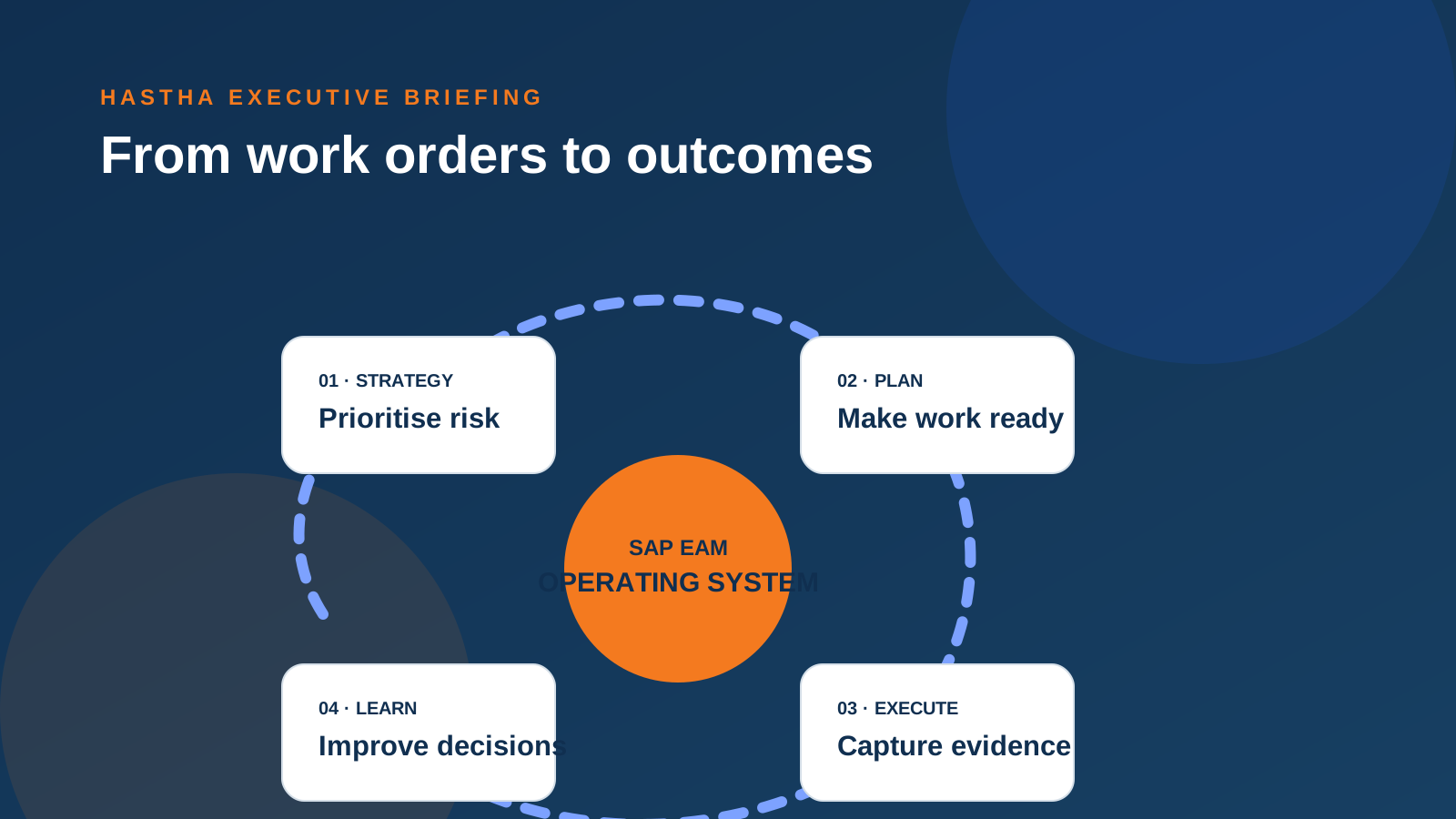
Maintenance performance is produced by a chain of decisions: what assets matter most, which failure modes deserve attention, what work should enter the backlog, how it should be planned, when it should be scheduled, what the technician observes, and what the organisation learns afterwards. SAP supports that chain, but configuration alone does not join it up.
A practical EAM design makes the hand-offs explicit. A reliability strategy should influence task lists and preventive plans. Planning standards should influence material, labour and access requirements. Field evidence should update asset history and trigger engineering review where thresholds are crossed. Measures should reveal whether the system is improving decisions, not merely whether transactions close on time.
Define the decision and the evidence before the screen
For each critical workflow, identify the decision owner, the decision window and the minimum evidence required. A planner deciding whether work is ready needs different information from a field supervisor managing daily risk or an asset manager deciding whether to replace equipment. Trying to satisfy every role with one overloaded transaction creates noise and workarounds.
This approach also exposes where information belongs. Asset criticality may be governed in the asset master, location context in GIS, procedures in a content platform and workforce availability in scheduling tools. The experience can be connected without pretending that one system should own everything.
Decision: what choice or action must improve?
Actor: who is accountable and who contributes?
Evidence: which asset, work, condition, location and content data must be trusted?
Constraint: what safety, access, connectivity or regulatory condition shapes the workflow?
Measure: how will the organisation know the decision improved?
Make asset data an operational control
Asset-data programmes often become large clean-up exercises detached from daily work. A stronger model links data quality to operational consequences. If an incorrect functional location prevents dispatch, if missing criticality distorts prioritisation, or if an unreliable bill of material increases repair time, then the defect has an owner, a control point and a measurable impact.
Prioritise the fields that drive risk and work. Establish validation where information is created, stewardship where ambiguity is resolved, and feedback where field teams encounter defects. This turns data quality from a periodic project into part of the maintenance operating model.
Close the field-to-engineering learning loop
Mobile execution should reduce cognitive and administrative load in the field. The technician needs a clear job, the right procedure, relevant asset and hazard context, and a fast way to record findings. Photos, measurements, failure codes and comments are valuable only when their destination and use are understood.
Design the return path before deploying devices. Decide which observations update the technical record, which trigger follow-on work, which require engineering assessment and which feed reliability analysis. Where crews work offline, define synchronisation, conflict and evidence rules as part of the process—not as a late technical detail.
Measure flow, quality and operational effect
Backlog size and schedule compliance matter, but they are incomplete. A balanced view combines flow measures, data-quality measures, execution evidence and operational effects. Examples include ready-to-schedule ageing, emergency-work ratio, repeat defects, first-time completion, missing failure data, prevented-risk actions and asset-availability trends.
For each performance measure, identify who reviews it and what action it can trigger. Start with a small set tied to the improvement you want, assign owners and review results regularly. Retain the reporting needed for assurance and compliance.
A focused way to begin
Choose one consequential asset class or maintenance value stream. Map the decisions from strategy through execution and learning. Sample real work orders, speak with planners and maintainers, inspect the master data and quantify where delay, rework or uncertainty enters. The result should be a prioritised intervention plan—not a generic maturity score.
The strongest SAP EAM roadmap is one that links platform change to specific operating decisions, evidence and measures. That connection is what turns work-order processing into better asset outcomes.